
In August, hundreds of National Guard members worked through collapsed buildings, a simulated disease outbreak and mass casualty scenarios at Texas A&M Engineering Extension’s (TEEX) Disaster City®, where the region’s Homeland Response Force (HRF) is undergoing training and evaluations of its response to chemical, biological, radiological, nuclear or high-yield explosive (CBRNE) disasters.
The three-day preparedness drill involved dozens of volunteers who role-played as afflicted civilians, interacting with Guard members to treat fake wounds and simulate triage. Crews run the same scenarios multiple times each day, then face formal assessment against a set of standardized readiness metrics.
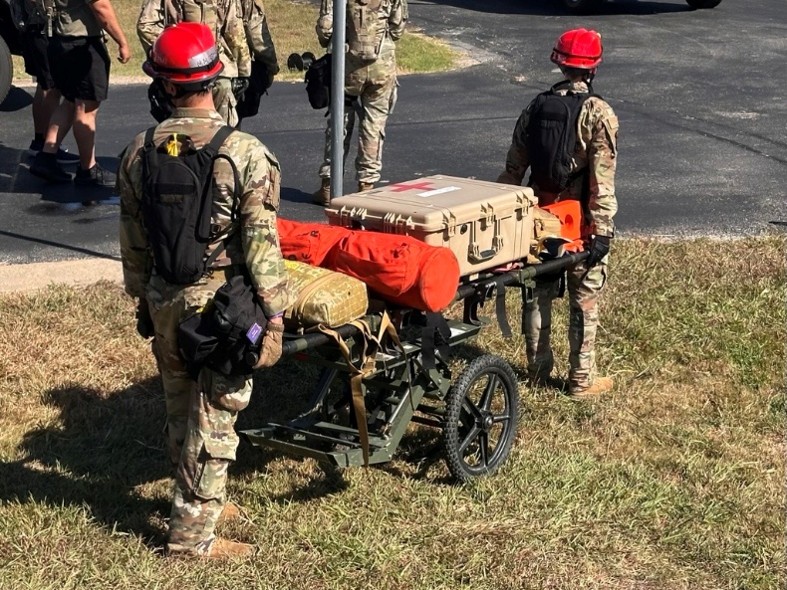
“The major events that these simulations are preparing the National Guard for are, in most cases, disasters that would quickly exceed the capacity of local resources,” said TEEX Emergency Management Instructor Clint Arnett. “So, with our unique facilities and support, these soldiers can validate their training to assist local authorities in the event of a major crisis where specialized additional resources are required.”
The HRF is a regionally aligned asset built to support and enhance local, state and federal emergency managers responding to natural, human-caused or terrorist-initiated disasters. HRF is funded by FEMA and made up of regional National Guard members who make up regional and state-based CBRNE Enhanced Response Force Packages (CERFP) utilized in times of major crisis. In other words, when a major crisis happens, and the National Guard is called to provide aid and command control to a disaster-affected area, these Guard members training at Disaster City specialize in that emergency response.
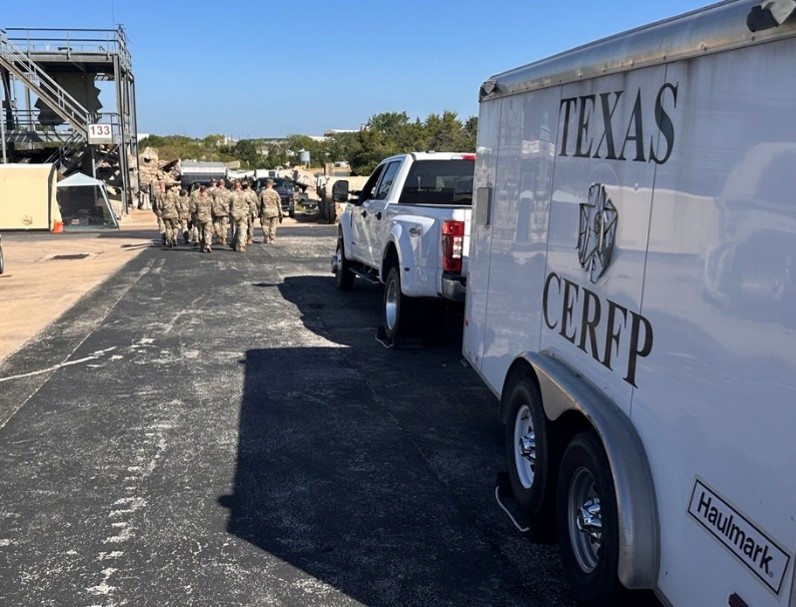
Once deployed, the unit can handle command and control, security, search and extraction, decontamination and medical triage before transitioning operations back to civil authorities. Practice exercises, like the one at TEEX’s Disaster City, train Guard members to integrate with civilian emergency management agencies during disaster response.
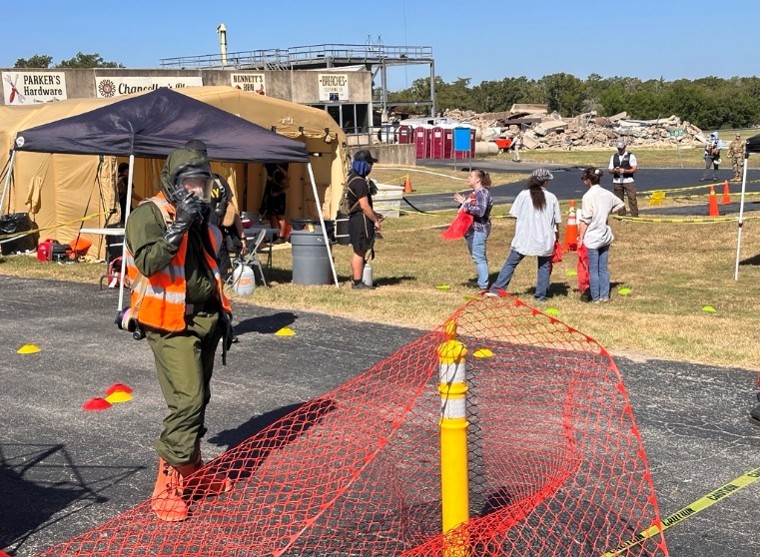
“TEEX facilities are capable of supporting complex, full-scale scenarios. Our unique campus and expert technical support ensure that our customers and students receive the most realistic training available,” said TEEX Rescue Program Director Scott Salter. “There are very few places in the world that can facilitate the kind of exercises we can here.”
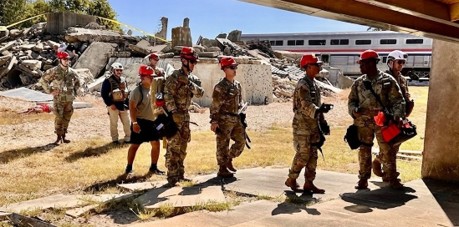
TEEX’s Disaster City is a mock urban landscape of damaged structures, rubble piles and collapsed buildings designed for large-scale emergency and preparedness exercises. The HRF performs an exercise every two years to maintain and evaluate the team’s readiness, and they return to Disaster City for training because of the amenities and technical support TEEX provides.
Army National Guard Intelligence and Operations Officer Jesse Turner attended the training and said, “The training venue and operational support provided by TEEX at Disaster City were outstanding. The highly realistic training grounds paired with the dedicated, professional staff enabled our joint force to efficiently validate our CBRN response capabilities. TEEX’s hosting ensured our personnel remain exceptionally prepared to respond rapidly and effectively in support of civil authorities and the nation.”
Distributed by:
Texas A&M Engineering Extension Service
Vita Vaughn | Director of Communications
[email protected]