
Rescue Training Props
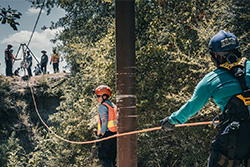
This prop is used during Rope Rescue Technician and custom course deliveries to demonstrate the use of rope systems and equipment to move patients across long distances or valleys and rivers. This area also simulates rescues of patients from valleys or ravines where rescuers must be moved out over the area by rope and lowered.
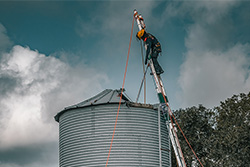
This area is utilized to train responders to handle a wide variety of emergencies that may occur in agricultural settings, such as grain bin entrapments, machinery entrapment with tractors, or other emergencies unique to the agricultural or rural setting. Classes may include Agricultural Rescue, offered during the TEEX Annual Municipal Fire School.
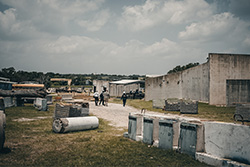
Training at Disaster City® begins in the Rescue Skills Training Area, a progressive environment offering a series of full-scale workstations for hands-on skills development. The skill objective of each station builds upon each previous one. Students learn to combine tools and techniques to lift and remove heavy objects, construct interior and exterior shoring, and practice breaching and breaking concrete in a variety of disciplines. (Props 120-124)
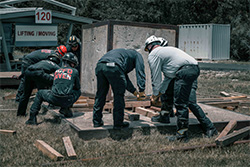
This area is utilized for Structural Collapse training courses to teach responders how to efficiently, safely, and properly shore (stabilize) the exterior of a collapsed structure. Responders learn how to use both aluminum and wood shoring equipment in a variety of configurations. Classes may include Structural Collapse Specialist, Full-Scale Exercises, and Refresher Workshops.
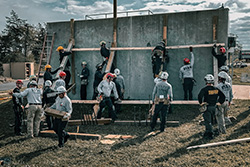
This area is utilized for Structural Collapse training courses to teach responders how to efficiently, safely, and properly shore (stabilize) the exterior of a collapsed structure. Responders learn how to use both aluminum and wood shoring equipment in a variety of configurations. Classes may include Structural Collapse Specialist, Full-Scale Exercises, and Refresher Workshops.
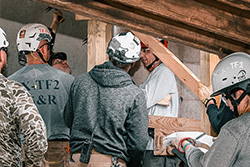
This area is utilized for Structural Collapse training courses to teach responders how to efficiently, safely, and properly shore (stabilize) the interior of a collapsed structure. Responders learn how to use both aluminum and wood shoring equipment in a variety of configurations. Classes may include Structural Collapse Specialist, Full-Scale Exercises, and Refresher Workshops.
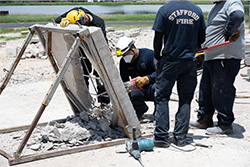
This area is utilized for Structural Collapse training courses to teach responders to safely and efficiently perform the breaching or breaking of concrete and other heavy construction materials. Responders learn to use a multitude of different breaching and breaking tools. Classes may include Structural Collapse Specialist, Full-Scale Exercises, and Refresher Workshops.
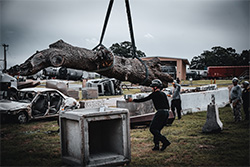
This area is utilized for Structural Collapse training courses to teach responders how to safely work with and around heavy cranes utilized in lifting and moving operations. Classes may include Structural Collapse Specialist, Full-Scale Exercises, and Refresher Workshops.
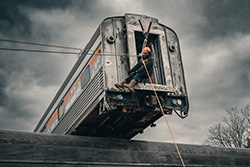
A prominent icon of Disaster City,® these passenger train cars were donated by Amtrak.® The cars are arranged in a realistic derailment configuration to provide students with a real-life scenario where they practice specialized passenger rail rescue techniques, rope rescue,or emergency medical response training. Classes may include Passenger Rail Rescue and Medical Emergency Response.
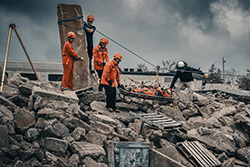
This rubble pile simulates the collapse of a commercial structure, replicating the effects of a natural or man-made disaster. Within the prop are multiple hiding locations for both manikins and live role-players used during classes and exercises. Classes may include Advanced Structural Collapse 4, Canine Search Specialist, Technical Search Specialist, and Full-Scale Exercises.
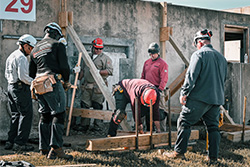
This dwelling simulates structural damage from a natural or man-made disaster. It features a basement to provide realistic training for responders from around the world. Classes may include Structural Collapse Specialist, Advanced Structural Collapse 3, Advanced Structural Collapse 4, Canine Search Specialist, Technical Search Specialist, and Full-Scale Exercises.
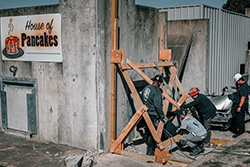
Structure replicates a pancake collapse of several floors requiring multiple shoring, breaching, breaking, and search techniques to perform simulated rescues. It includes props for training search and rescue canines and their handlers to respond to emergencies around the world. Classes may include Structural Collapse Specialist, Canine Search Specialist, Technical Search Specialist, and Full-Scale Exercises.
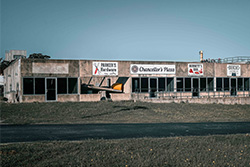
The strip mall building is comprised of five connecting rooms, with each featuring a specific type of structural failure that requires students to utilize different rescue skills. The structure delivers the dimension of unpredictability, which often occurs in a real-life collapse.
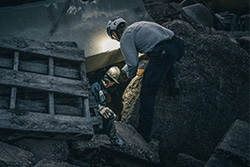
Area simulates a collapse of a commercial structure, replicating the effects of a natural or man-made disaster. Within the prop are multiple hiding locations for both manikins and live role-players. This training prop also includes multiple interior breaching panels in a tunnel system. Classes may include Advanced Structural Collapse 4, Canine Search Specialist, Technical Search Specialist, and Full-Scale Exercises.
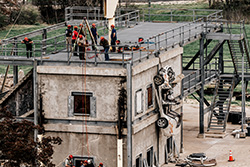
This training structure draws from large disasters such as the Murrah Building Bombing, the 1993 attack on the World Trade Center, and the Northridge earthquake freeway collapse. The prop includes multiple features, including steel beams for working with cutting torches, concrete breach panels in multiple configurations, rope rescue training platforms, a crane for placing concrete panels, hanging debris, and a multi-level maze.
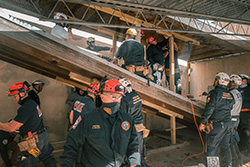
This building is designed to simulate a theater complete with a vestibule, stage, seating, and a sloped floor. The prop also features multiple rooms that can simulate office spaces, or other rooms commonly found in a theater setting. Classes include Advanced Structural Collapse 4, Full-Scale Exercises, and any classes needing to train indoors due to weather.
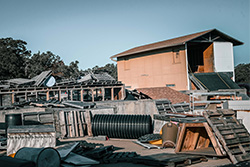
Area simulates lightweight construction occupancies such as wood-frame houses or trailers affected by a wind disaster like a tornado or hurricane, as well as events with explosions and blast pressure waves. It features internal mazes and tunnels, hiding locations, attic spaces, and closets. This prop is used for Technical Search or Canine Search Specialist as well as Full-Scale Exercises.
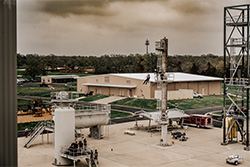
Consisting of multiple training props, this area is used for rope rescue and confined space rescue training. These training structures simulate types of items that might be found in industrial facilities around the world.
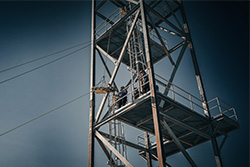
This tower simulates multi-level platforms or towers commonly found at many industrial facilities. The prop features multiple catwalks in various configurations, ladders with cages, a slope wall vessel, and platforms for rope rescue training. Courses using this prop may include Rope Rescue A&O, Rope Rescue Technician, Confined Space Rescue Technician, and Exercise type events.
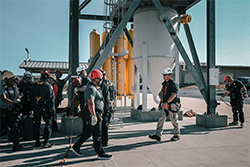
This part of the I-Beam Tower simulates vessels at industrial facilities that have sloped walls and may contain dry bulk or liquid products that can present engulfment hazards. The prop opens from the top and is filled with plastic balls to simulate an engulfment hazard. The prop also has a chair inside for instructors to monitor student progress. Used for rescue refresher classes and the Confined Space Rescue Technican Course.
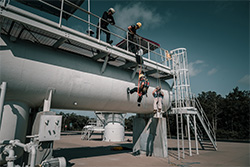
This training prop is designed to simulate many vessels commonly found in industrial facilities. The vessel features multiple shelves, baffles, weirs, internal configurations, and an additional internal space to aid in providing realistic, relevant and impactful training for students. This prop is used most often during Confined Space Rescue classes.
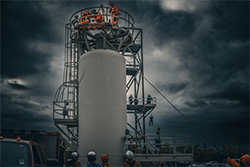
This training prop is designed to simulate many vessels commonly found in industrial facilities and plants. The vessel features multiple shelves, and a sloped floor to simulate unique internal configurations. This prop is commonly used in Rope and Confined Space classes to add complexity by using interior shelves that can be offset.