
Calm in the Storm: Shaping the Next Generation of Paramedics
The Emergency Medical Services (EMS) Program at the Texas A&M Engineering Extension Service (TEEX) is redefining first responder education through innovative training that prepares students for the realities of emergency medical care. By combining technology with realistic simulations and hands-on field experiences, the program equips future emergency responders with the confidence, skills and relationships needed to excel in their careers.
Central to the 1,268-hour paramedic curriculum is an emphasis on experiential learning that goes beyond traditional classroom lectures. TEEX prepares prospective paramedics for the immediate pressures of the profession at Disaster City®, a premier 52-acre mock town featuring training areas designed for complex simulations.
“The scenarios we build in these environments create a realistic feeling of stress in a positive, controlled way, mirroring exactly what they will face on 911 calls in the field,” said EMS Program Director Rachel Montgomery. “We can discuss medical concepts in a classroom, but experiencing physical urgency is what truly prepares them to be ready for day one. With Disaster City, simulations, the ambulance and the 3D printing, we really have some things beyond instruction that make the best paramedics.”
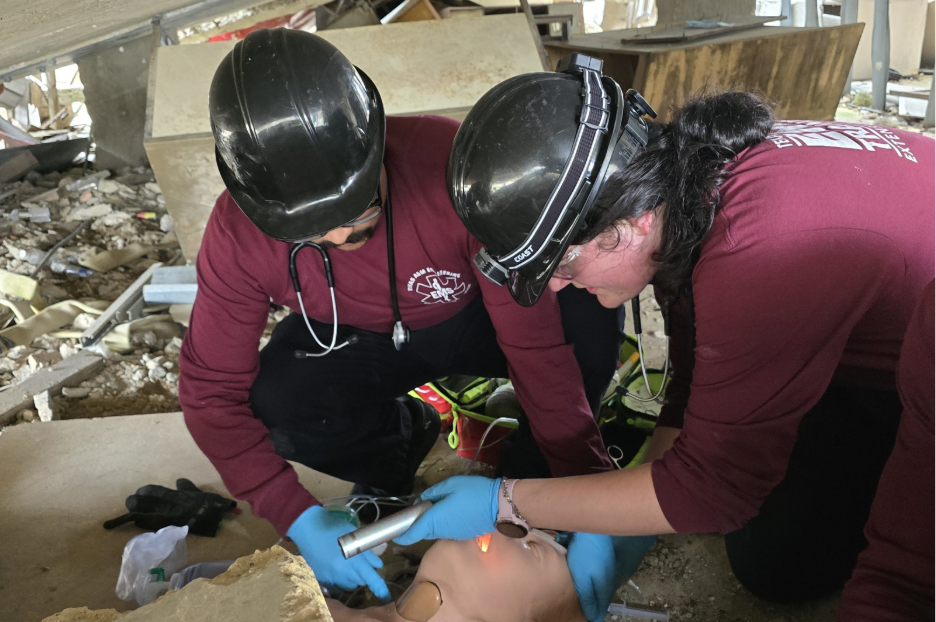
Innovation extends beyond simulation training. In a workshop near Disaster City, EMS Instructor Josh Frazier uses 3D printing technology and synthetic materials to manufacture affordable, anatomically accurate training tools like scaled larynxes, filament rib cages and realistic silicone skin.
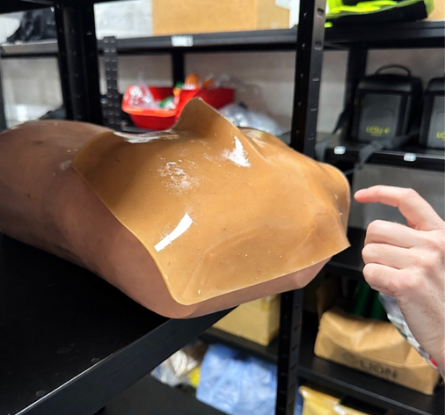
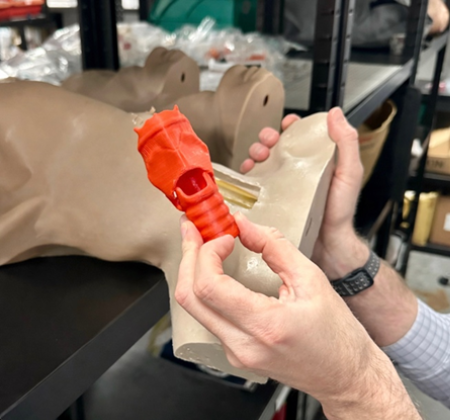
“By making these in-house, students get to learn differently than in a standard cadaver lab,” Frazier said. “The synthetic skin allows students to practice on materials that feel and look closer to the real thing.”
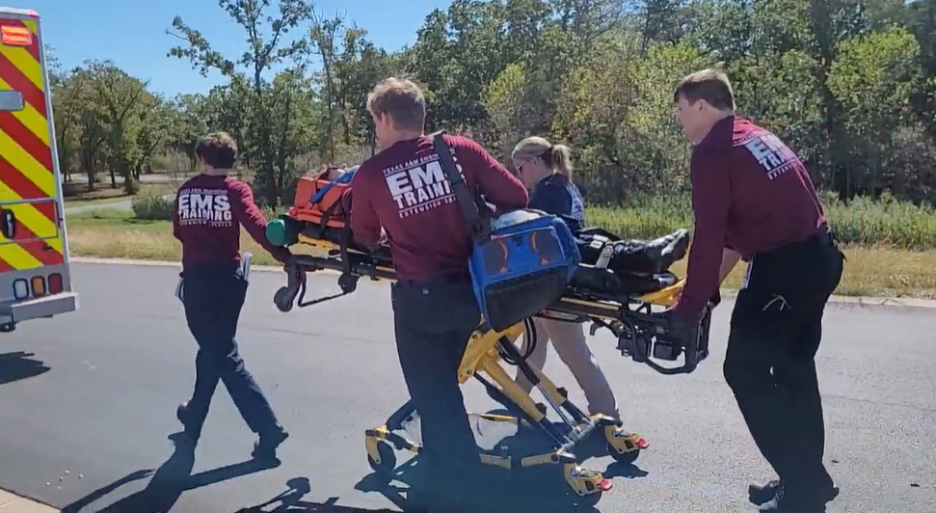
These training aids allow students to practice procedures dozens of times, building critical muscle memory before working with high-fidelity manikins or live patients. The program also provides hands-on experience in an industry-standard ambulance, where students routinely practice lifting stretchers, securing patients and performing procedures such as IV insertion while the vehicle is moving.
The program’s innovative approach has earned strong praise from students, graduates and industry partners. Clinical partners consistently report that TEEX graduates arrive well-prepared for the demands of emergency medical service.
“A lot of times, a student’s first time holding a real stretcher or initiating an IV inside a moving vehicle occurs on the job, but that is never the case with our graduates,” Montgomery said. “Our training ensures they enter the workforce with the confidence and actionable skills required to handle real-world emergency calls. We routinely get feedback that our students are some of the most prepared for what they will see in a moment of crisis.”
Graduates also credit the program’s instructional team for their success. Under Montgomery’s leadership, instructors provide individualized support, tutoring and mentorship that often continues long after students complete the program.
“Our team is incredibly passionate about EMS, and that energy flows directly to our students,” Montgomery said. “We build genuine support systems so students know their instructors truly care about their professional growth and development. We keep up with students after they graduate. We think about them as more than ‘just a student.’”
TEEX EMS Program graduate Josh Ostberg, current paramedic and firefighter with the College Station Fire Department, said the instructors were one of the program’s strengths.
“What truly set TEEX apart was the experience and knowledge of the instructors and how they incorporate real-world scenarios and field experience into the course material.”
As the emergency medical profession continues to evolve, TEEX remains committed to adapting curriculum to meet changing industry needs. Through innovation, experience and student support, the TEEX EMS Program ensures graduates are fully prepared to navigate unpredictable situations with composure.
“In EMS, we are going into someone else’s chaos, and our goal is to teach students how to make that environment less chaotic,” Montgomery said. “We train our students to be the calm in someone’s storm, and that is needed on someone’s worst day.”
Distributed by:
Texas A&M Engineering Extension Service
Vita Vaughn | Director of Communications
[email protected]